
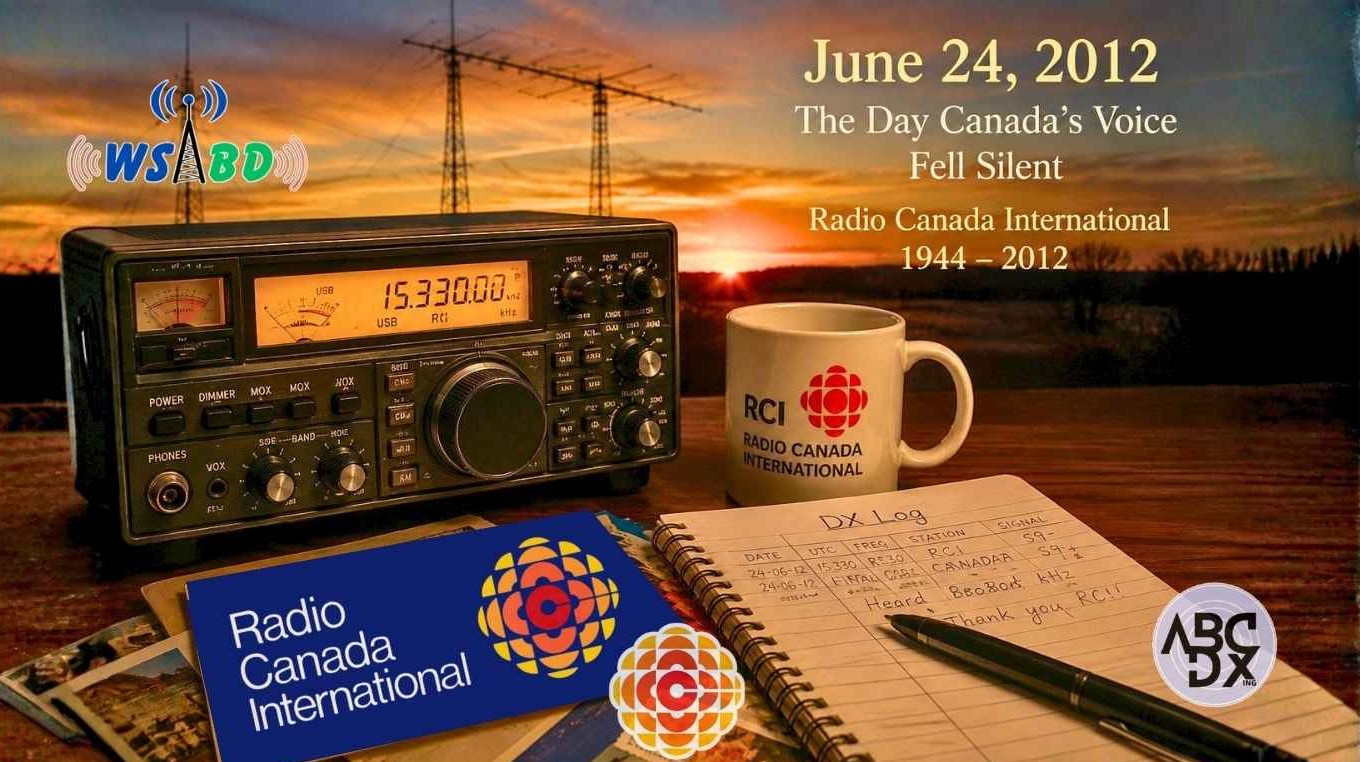

There are dates that quietly pass through history. Then some dates remain permanently etched into memory—the date when we said Goodbye, and Radio Canada International fell silent.
For most people, June 24, 2012, was simply another summer day. Around the world, people went about their daily lives without realizing that something remarkable was coming to an end.
But for thousands of radio listeners, shortwave enthusiasts, and DXers scattered across every continent, that day carried a very different meaning.
It was the day Radio Canada International left the shortwave airwaves.
Fourteen years have passed since those final transmissions departed the famous Sackville transmitting station in New Brunswick. Yet for many listeners, the memory remains as vivid as ever. The frequencies are silent now, the antennas are gone, and the broadcasting landscape has changed dramatically. Still, every June, countless DXers find themselves remembering a station that once connected Canada to the world through the magic of radio.
This is not merely the story of a broadcaster. It is the story of what that broadcaster meant to those who listened.
Every DXer Has a Station They Never Forget
Ask any experienced DXer about the station that shaped their listening journey, and you will almost certainly receive an immediate answer.
Some will mention the BBC World Service. Others will recall Radio Australia, Radio Netherlands Worldwide, Deutsche Welle, or the Voice of America.
For many of us, however, Radio Canada International occupies a special place that is difficult to describe.
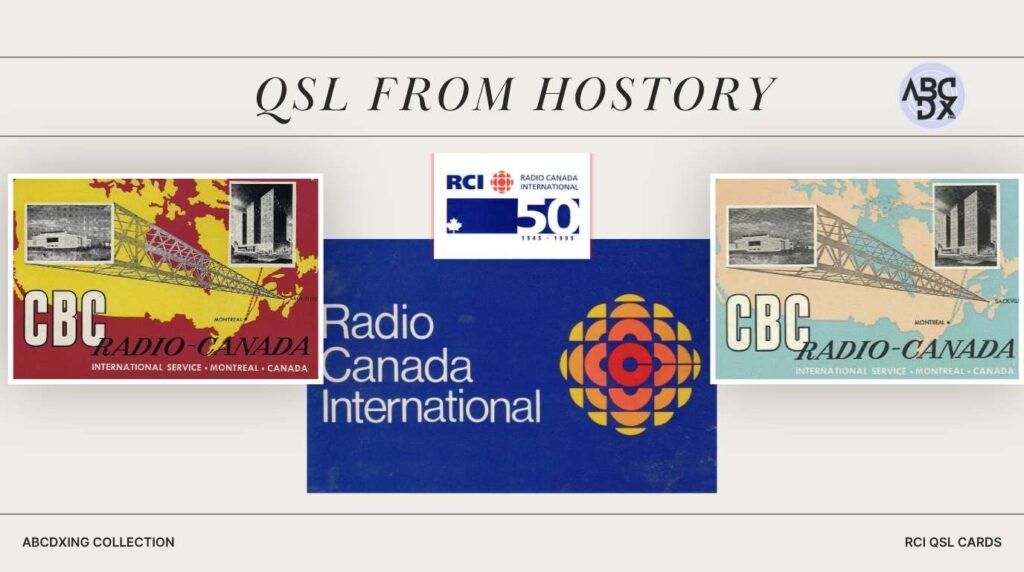
It might have been one of the first international stations we successfully logged. Perhaps it was the warmth of its presentation, or the excitement of receiving a beautiful QSL card from Canada after sending a reception report halfway around the world.
Whatever the reason, RCI became more than a signal on a frequency.
It became part of our radio lives.
I still remember evenings spent slowly tuning across crowded shortwave bands, searching for distant voices hidden among fading signals and atmospheric noise. There was always a sense of satisfaction when the unmistakable identification of Radio Canada International emerged from the speaker.
The station felt familiar.
Reliable.
Welcoming. In a hobby built upon distance, RCI somehow felt close.
Radio Canada International - More Than News and Information
Radio Canada International certainly informed its audience. It reported world events, explained Canadian affairs, and introduced listeners to the country’s culture and people.
Yet what made the station memorable was something deeper.
RCI never felt as though it was simply broadcasting at its audience. Instead, it seemed to be speaking with them.
Listeners were acknowledged.
Letters were answered.
Reception reports mattered.
Mailbag programs transformed distant listeners into members of a worldwide community.
Long before social media connected people instantly, Radio Canada International was already creating international friendships through radio.
For many DXers, the arrival of an RCI envelope in the mailbox was an event worth celebrating.
Inside might be a QSL card, a station schedule, a sticker, or a letter from the listener relations department. These items were small in size but enormous in meaning. They represented proof that a signal had travelled thousands of kilometres and that someone on the other side of the world had taken the time to respond. Those experiences helped define an entire generation of radio enthusiasts.
The Long Goodbye
The first decade of the twenty-first century was not kind to international shortwave broadcasting.
Across the world, governments began reducing budgets for overseas radio services. The internet was becoming increasingly important, and many decision-makers viewed shortwave broadcasting as an outdated technology whose time had passed.
For DXers, the warning signs were impossible to ignore.
One historic broadcaster after another reduced frequencies, closed language services, or left shortwave entirely. Stations that had once filled the bands gradually disappeared.
Even so, many listeners believed Radio Canada International would survive.
After all, RCI had weathered decades of political change, technological innovation, and financial challenges. It possessed a loyal audience and a respected international reputation.
Then came the announcement in 2012.
The budget reductions were devastating.
Shortwave broadcasting would end.
The Sackville transmission facility would fall silent. We said goodbye, Radio Canada International!
Much of the organization that listeners had known for decades would disappear.
The news spread rapidly through radio clubs, DX bulletins, and online forums.
Disbelief soon gave way to sadness. An era was ending.
The Final Broadcast of Radio Canada International
As June 2012 approached, listeners began preparing for a farewell they never expected to experience.
Some recorded the final broadcasts.
Others collected schedules and station publications as keepsakes.
Many simply tuned in one last time.
Around the world, radios were switched on in homes, apartments, listening shacks, and remote locations. Some listeners used sophisticated communications receivers connected to outdoor antennas. Others listened on modest portable radios.
The equipment did not matter.
The moment did.
When Radio Canada International signed off and said goodbye to its shortwave service on June 24, 2012, listeners understood they were witnessing history.
The silence that followed felt strangely profound.
A frequency that had carried Canada’s voice for generations suddenly became empty.
For those who had grown up with international radio, the loss was difficult to accept.
We knew that websites would remain.
We understood that digital media would continue.
Yet we also understood that something irreplaceable had vanished.
A webpage can deliver information. A shortwave signal delivers an experience.
When the Towers Fell
The end of broadcasting was painful enough.
The eventual demolition of the Sackville antennas made the loss feel permanent.
For decades, those towers had represented Canada’s connection to the world. Their signals travelled across oceans, crossed political boundaries, and reached listeners in places where internet access was limited or unavailable.
Photographs of the dismantling process circulated throughout the DX community.
Many listeners found them difficult to watch.
The destruction of the towers symbolized more than the removal of infrastructure. It represented the disappearance of a chapter in broadcasting history.
Once the antennas were gone, there could be no illusion that the station might someday return. The Voice of Canada had truly fallen silent.
Why We Still Remember Radio Canada International
Perhaps the most remarkable aspect of Radio Canada International is that it is still remembered so fondly, even though we said Goodbye.
More than a decade has passed.
New technologies have emerged.
Listening habits have changed.
Many younger radio enthusiasts never experienced RCI on shortwave at all.
Yet mention the station in any gathering of veteran DXers and the memories immediately begin to flow.
Someone remembers a powerful signal on a winter evening. A cherished QSL card comes to mind.
Someone remembers a listener program.
Someone remembers the excitement of hearing Canada from thousands of kilometres away.
These memories endure because they were never just about radio.
They were about discovery.
Curiosity.
Friendship.
Connection. Radio Canada International represented all of those things.
A Message to Younger DXers
If you entered the hobby after 2012, you may know Radio Canada International only through articles, recordings, and old QSL cards.
That is unfortunate, but it should not discourage you.
The history of stations such as RCI helps explain why so many people remain passionate about shortwave radio today.
The hobby has never been solely about technology.
It is about exploration.
It is about discovering cultures, languages, and perspectives beyond our immediate surroundings.
That spirit continues even when individual stations disappear.
Every generation of DXers inherits the stories of those who came before them.
Radio Canada International is one of those stories. And it deserves to be remembered.
June 24: A Date Worth Remembering
Each year, when June 24 arrives, many listeners quietly pause to remember what was lost.
We remember the frequencies.
Remember the interval signals.
We remember the presenters.
Memories of the QSL cards.
We remember the excitement of hearing Canada emerge from the noise of the shortwave bands.
Most of all, we remember how radio made the world feel smaller and more connected.
Radio Canada International may no longer be heard on shortwave.
The transmitters may be silent.
The towers may be gone.
Yet every time a DXer opens an old logbook, discovers an RCI QSL card, or recalls a favorite broadcast, the station comes alive once again.
In that sense, Radio Canada International has never truly disappeared.
Its signals continue to travel, not through the ionosphere, but through the memories of those fortunate enough to have heard them. And as long as those memories remain, the Voice of Canada will never be completely silent.
"June 24, 2012: Remembering the Day Radio Canada International Fell Silent" is a personal feeling of OM Ashik Eqbal Tokon (S21TS) of Rajshahi, Bangladesh.