
As a dedicated radio hobbyist and serious DXer, few stations in the Pacific capture the imagination like Radio Cook Islands (RCI). This national broadcaster serves as the "Voice of the Nation" for one of the most remote archipelagos on Earth. Whether you're chasing its faint 630 kHz AM signal across thousands of kilometres or streaming its vibrant Polynesian music from your desktop, RCI offers a unique window into Cook Islands Māori culture, local news, and island life. This comprehensive guide is optimized for radio enthusiasts. We'll explore the full story of the Cook Islands Broadcasting Service. Discover its rich history, current technical setup, programming, reception tips, and practical ways to tune in today. Perfect for DXers logging Pacific islands or anyone fascinated by remote broadcasting.
History of Radio Cook Islands: From Experimental Roots to National Voice
Radio Cook Islands began in 1954 using a repurposed 100-watt Post & Telegraph shortwave transmitter at Black Rock near Avarua on Rarotonga for school broadcasts on 3390 kHz (later 5050 kHz). It expanded to general service by 1955 with callsign ZK1ZA (initially ZL1ZA). Started airing bilingual programs in English and Cook Islands Maori on Thursdays. This experimental educational station (ZK1ZA and related callsigns) operated limited hours on weekdays.
The modern era dawned in the 1970s when the Government of the Cook Islands launched Radio Cook Islands on mediumwave 630 kHz AM. Cook Islands Broadcasting Corporation was formally established in 1989 under the Broadcasting Act to provide national radio and TV services.
Initially a government-run public service with a powerful 5 kW transmitter, the station quickly became the lifeline for news, information, and cultural preservation across 15 scattered islands. It was privatised briefly in 1996. It returned to government control in late 1998. This was acquired in March 1999 by Elijah Communications (a subsidiary of the Pitt Media Group). This shift brought financial reforms, content upgrades, and a stronger focus on local artists and language.
Technical Evolution
Early shortwave setups included 500-watt transmitters on 5050 kHz (ZK5) and 9695 kHz (ZK3) after relocation to Avarua in 1961. A 10 kW mediumwave transmitter on 600 kHz launched in 1962 at Matavera (Takitumu School). It shifted to 630 kHz later with a 350 ft mast (dismantled in 2019). Power upgrades reached 5 kW by 1967, with tests on 11760 kHz. The signal received in the US in 1974 and in France on 5045 kHz in 1976.
By the early 2000s, RCI had evolved into a true national broadcaster while maintaining its public-service ethos. Shortwave transmissions (historical frequencies like 3265 kHz, 5045 kHz) once reached outer islands and overseas Cook Islanders. It ceased decades ago after technical issues and the rise of FM relays. Today, RCI stands as a resilient symbol of Polynesian identity in the digital age.
DXing Insights
DXers logged RCI on 11760/15170 kHz (Pacific music) into the 1980s-90s from Australia, NZ, US, and Europe; 1993 visit confirmed strong local MW 630 kHz (5 KW) and FM 89.9 MHz, booming locally but challenging for distant DX. No recent SW revivals noted. A 1992 fire destroyed the SW transmitter building near Avarua, ending shortwave permanentlyPacific reception.
How SW was destroyed by fire
The 1992 fire that ended shortwave broadcasting from Radio Cook Islands destroyed the Cable & Wireless (C&W) transmitter building near Avarua on Rarotonga. This building housed the SW equipment. Details on the incident are sparse, with no public records of the exact cause, date beyond May 1992, or casualties mentioned in DX reports.
The fire occurred in May 1992 at the C&W facility west of Avarua, which shared space with Radio Cook Islands' shortwave transmitters (ZK3 on 9695 kHz, ZK5 on 5045/5050 kHz). It completely gutted the building, rendering the SW gear unusable and marking the permanent end of SW operations. Still, they have no rebuild plans in place, as FM relays suffice for the outer islands. The site later became a courthouse after lying vacant.
DXer Guy Atkins visited in April 1993 and spoke to RCI engineers, who described the fire happening 4-5 months prior (late 1992 context aligns with May). He inspected the scorched concrete foundation near a city square, confirming burn marks. The receptionist insisted SW was active based on a newspaper ad listing 11760 kHz, unaware of the destruction.
Current Technical Setup: Frequencies, Transmitters & Coverage
RCI operates a hybrid AM/FM system optimised for the Cook Islands' challenging geography (Rarotonga as the hub, with remote Northern and Southern Groups).
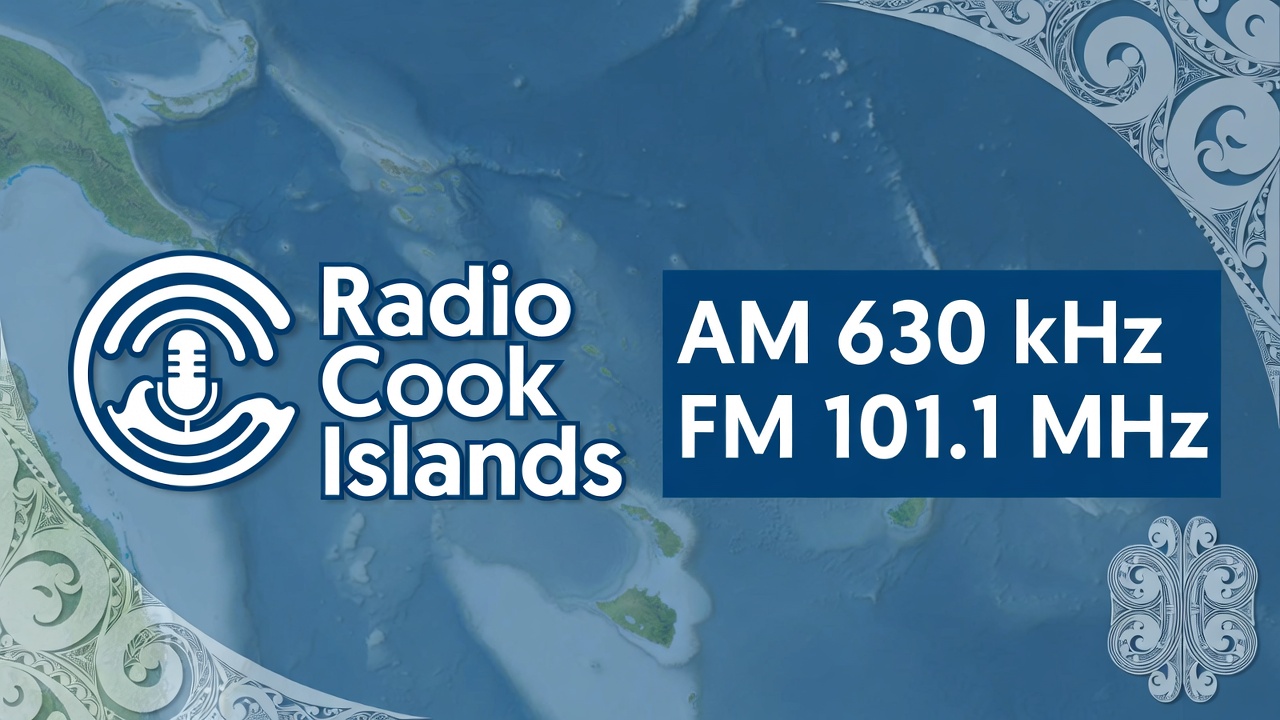
- AM 630 kHz (ZK1ZC): The flagship mediumwave service. Originally 5 kW at the Matavera site, power halved for cost reasons. In 2019, officials dismantled the aging mast due to safety concerns during cyclone season. They briefly shifted service fully to FM but reactivated the backup 1 kW transmitter at Black Rock (Rarotonga) in October 2019. It remains the sole MW outlet, providing wider reach—especially to distant Northern Group islands where FM signals fade. DXers note its low power makes this one of the toughest Pacific island catches.
- FM 101.1 MHz (and relays): The primary modern service on Rarotonga, with additional low-power FM repeaters on outer islands (some relayed via internet). Earlier FM allocations included 88.8 MHz and 89.9 MHz, but the network standardised around 101 MHz post-2019 upgrades for better local coverage. FM excels on Rarotonga and Southern Group but relies on internet feeds for some Northern islands.
Coverage: Full national reach on Rarotonga and the Southern Group; Northern Group (e.g., Penrhyn) often requires car radios with improvised antennas or internet relays. No active shortwave in 2026—RNZ Pacific shortwave sometimes fills the gap for international listeners.
Headquartered in Avarua (Rarotonga), the station uses a mix of modern and legacy equipment to serve a population under 20,000 while reaching the global Cook Islands diaspora.
Radio Cook Islands: Culture, News & Community at the Heart
RCI blends 70% Polynesian/Cook Islands music with 30% English-language tracks, promoting local artists and preserving Māori language and traditions. Programming is approximately 80% in Cook Islands Māori and 20% in English (varies by show).
Key elements include:
- News: Local and Pacific regional updates hourly (English/Māori), with a 5pm roundup.
- Talkback & Community: Daily segments for public comments, dedications, bereavement notices, and fundraising radiothons.
- Cultural Shows: Imene Tuki (hymns), Tua Māori, devotions, and storytelling.
- Music & Entertainment: Interactive Top 20, Poly Top 10, and dedications.
- Specials: Sports, public health, government updates, and church programmes (e.g., Apostolic, SDA).
The station remains a vital emergency lifeline during cyclones, delivering timely warnings and information.
Tune FM 101.1 MHz on Rarotonga or AM 630 kHz for broader coverage.
Online Streaming:
TuneIn Radio (search "Radio Cook Islands 101.1 FM")
Broadcast hours:
Typically 6am–11pm (weekdays), later on weekends.
Official website: radio.co.ck
Mobile apps: "Cook Islands Radio + Radio FM" (Google Play/App Store)
Email dedications: [email protected] or [email protected]
DXing 630 kHz AM – The Ultimate Challenge: This low-power signal is a prized "rare DX" target for serious Pacific hunters. Reception is possible from Australia, New Zealand, North America, and even Europe under optimal conditions, but it's tough due to power reduction and tropical interference.
Pro Tips:
- Best times: Pacific greyline (dawn/dusk local), especially 06:00–10:00 UTC or evening propagation.
- Equipment: SDR receiver, beverage or loop antenna, noise reduction.
- Avoid: Local QRM from stronger Asian/American stations on nearby channels.
- Logs: Check DX forums (e.g., Ultralight DX groups, World Radio Map) for recent reports—many note it's audible only with excellent conditions and patience.
- Historical recordings (1990s) are available online for reference.
For outer-island relays or RNZ Pacific shortwave overlap, use KiwiSDR networks in the Pacific.
Recent Developments & Future Outlook
The 2019 transmitter transition highlighted resilience: AM was restored despite infrastructure challenges, ensuring cyclone-season coverage. RCI continues upgrading FM networks and embracing digital tools for the diaspora. As streaming grows, the station balances tradition with modern accessibility—remaining the heartbeat of Cook Islands identity.
Conclusion: Why Every DXer Should Chase Radio Cook Islands
Whether you're logging your first Pacific AM whisper or immersing in Māori hymns via stream, Radio Cook Islands delivers authentic island broadcasting at its finest. It's more than radio—it's a cultural treasure preserving language, music, and community in one of the world's most isolated nations.
Tune in today, share your reception reports in the comments, and bookmark this guide for your next DXpedition. Kia Orana (hello/goodbye) from the South Pacific!
Last updated: March 2026. Frequencies and schedules can change—always verify via official sources.
Reference: