
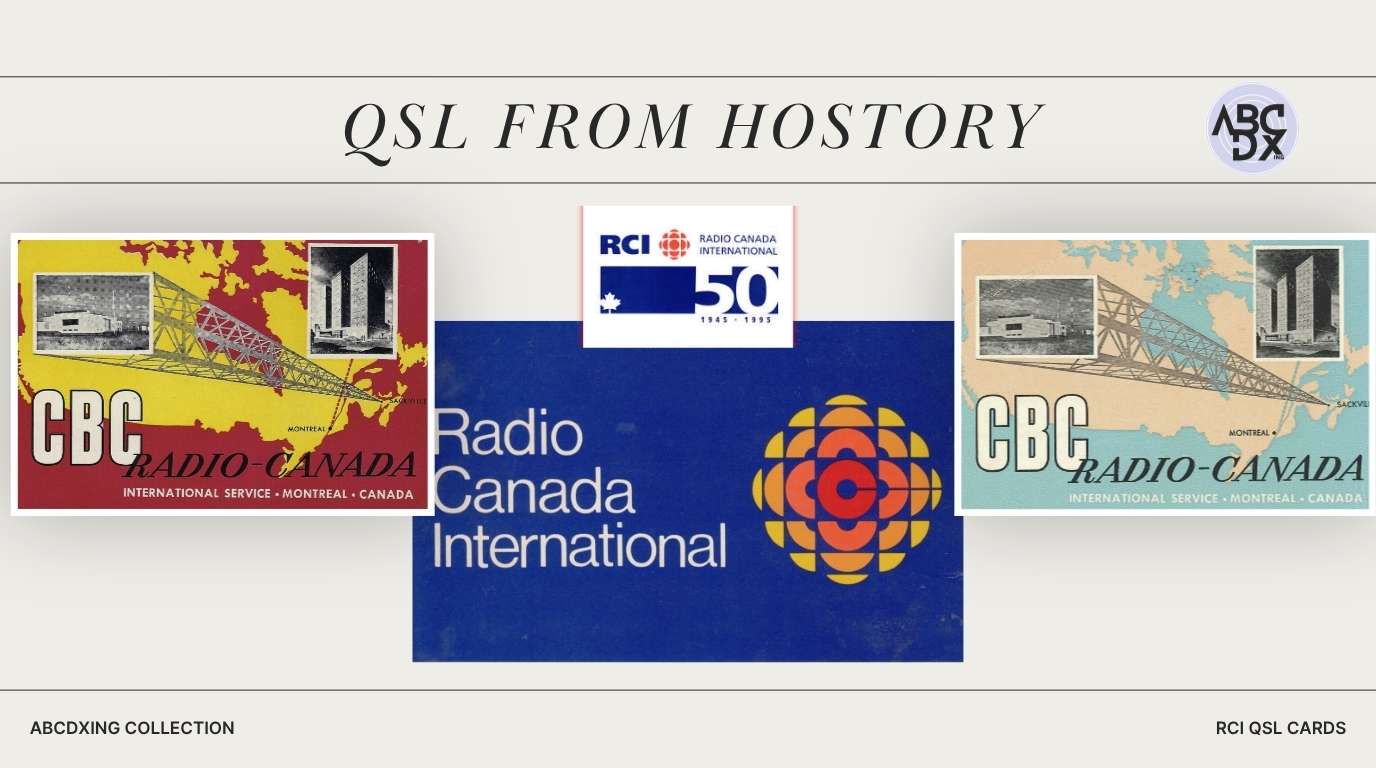

One of RCI's greatest strengths was "Radio Canada International Language Service". It's made their ability to communicate with audiences in multiple languages all over the world. Over the decades, the broadcaster adapted its language services to reflect changing world events, immigration patterns, international priorities, and audience demand.
The Founding Language of Radio Canada International (1944–1947)
When Canada's international service first took to the airwaves during the final months of the Second World War, broadcasting began in English and French. It reflects Canada's two official languages. These services remained at the heart of RCI's mission throughout its history and continued until March 2021.
As the service expanded after the war, additional European languages were introduced. During the late 1940s, listeners could hear programs in German, Danish, Dutch, Swedish, Norwegian, Italian, Spanish, and Portuguese for Brazil. This expansion reflected Canada's growing international engagement and the importance of Europe and Latin America in the post-war world.
Expansion During the Cold War (1950–1952)
The early 1950s marked one of the most significant periods of growth for Radio Canada International language Service. New broadcasts launched in Finnish, Hungarian, Polish, Russian, Slovak, and Ukrainian. These language services were introduced during a period of heightened East-West tensions, when international broadcasting played an important role in providing information across political boundaries.
Not all of these services survived for long periods. The Finnish service, for example, operated for only a few years, ending in 1955. Others continued for decades and became familiar voices to listeners throughout Eastern Europe and the Soviet Union.
The First Major Restructuring (1961)
March 1961 brought the first major reduction in RCI's language portfolio. Services in Danish, Dutch, Italian, Norwegian, and Swedish were discontinued as the broadcaster concentrated resources on other target areas. While these closures marked the end of an important chapter, RCI continued to maintain a strong multilingual presence on the international bands.
Radio Canada International Reaching New Audiences (1980s–2000)
During the late 1980s, RCI broadened its focus beyond Europe. New services introduced in Mandarin Chinese, Japanese, and French-Creole, reflecting Canada's increasingly diverse international interests and the growing importance of Asia and the Caribbean.
The launch of the Mandarin service in 1988 proved particularly significant. It remains one of the few language services that survived the major restructuring efforts that followed in later years.
The End of the Cold War and Major Languages (1991)
Perhaps the most dramatic change in RCI's language history occurred on 25 March 1991. Following budget reductions and changing geopolitical realities after the Cold War, several long-established language services were discontinued simultaneously.
The affected languages included:
- Czech
- German
- Hungarian
- Japanese
- Polish
- Portuguese (Brazil)
- Slovak
For many listeners, these closures represented the end of an era. Several of these services had been on the air for more than four decades and had built loyal audiences throughout Europe and beyond.
Entering the New Millennium
The year 2000 saw the launch of an Arabic service, demonstrating RCI's continued efforts to serve new international audiences. Around the same period, the French-Creole service came to an end after more than a decade of operation.
In 2004, the Portuguese-Brazilian service briefly returned to the airwaves, giving Brazilian listeners another opportunity to hear Canada's international voice. However, this revival proved temporary and ended in May 2012.
The Final Shortwave Years
As financial pressures increased during the 2000s, additional language services were lost. The Ukrainian service ended in 2009, while the Russian service continued until the major restructuring of 2012.
The budget cuts announced in 2012 dramatically reduced RCI's operations. Several language services disappeared, and the broadcaster transitioned away from its traditional shortwave role.
Radio Canada International: A New Digital Era
Although the historic shortwave service ended, Radio Canada International continued operating online in selected languages. Today, Arabic, Mandarin Chinese, and Spanish remain among the principal languages used by RCI's digital platforms.
In recent years, new initiatives have included content for Punjabi and Tagalog-speaking audiences, reflecting Canada's modern multicultural society and changing immigration patterns.
RCI Language Legacy
Year 1944 to 1961
| Year | Major Language Milestones |
| 1944 | English and French broadcasts begin, forming the foundation of Canada's international service. |
| 1946 | Danish, Dutch, German, Swedish, and Czech services were introduced during the post-war expansion period. |
| 1947 | Norwegian and Portuguese (Brazil) services launched. Spanish service begins on July 6. |
| 1949 | Italian service was added to the international schedule. |
| 1950 | Finnish service launched. |
| 1951 | Major Cold War expansion brings Hungarian, Polish, Russian, and Slovak broadcasts. |
| 1952 | Ukrainian service begins. |
| 1955 | Finnish service discontinued. |
| 1961 | First major restructuring: Danish, Dutch, Italian, Norwegian, and Swedish services end. |
The program broadcast from 1962 to 2010
| Year | Major Language Milestones |
| 1988 | Mandarin Chinese and Japanese services launched as RCI expands its focus toward Asia. |
| 1989 | French-Creole service introduced. |
| 1991 | Major post-Cold War cuts eliminate Czech, German, Hungarian, Japanese, Polish, Slovak, and Portuguese-Brazilian services. |
| 2000 | Arabic service launched. |
| 2001 | French-Creole service discontinued. |
| 2004 | Portuguese-Brazil service revived after a 13-year absence. |
| 2009 | Ukrainian service ends after 57 years on air. |
RCI Language 2010 onwards
| Year | Major Language Milestones |
| May 2012 | Russian and revived Portuguese-Brazil services terminated. |
| June 2012 | End of RCI's historic shortwave broadcasting era following major budget cuts. |
| 2021 | Punjabi and Tagalog content initiatives announced for digital audiences. English and French legacy broadcast services conclude their traditional RCI operations on March 31. |
| Today | RCI continues as a digital multilingual platform, primarily serving audiences in Arabic, Mandarin Chinese, Spanish, English, French, Punjabi, and Tagalog. |
The evolution of Radio Canada International's language services reflects changing global priorities, from post-war Europe and the Cold War to the multicultural and digital realities of the twenty-first century. Few international broadcasters adapted to so many geopolitical changes while maintaining a distinct national voice.